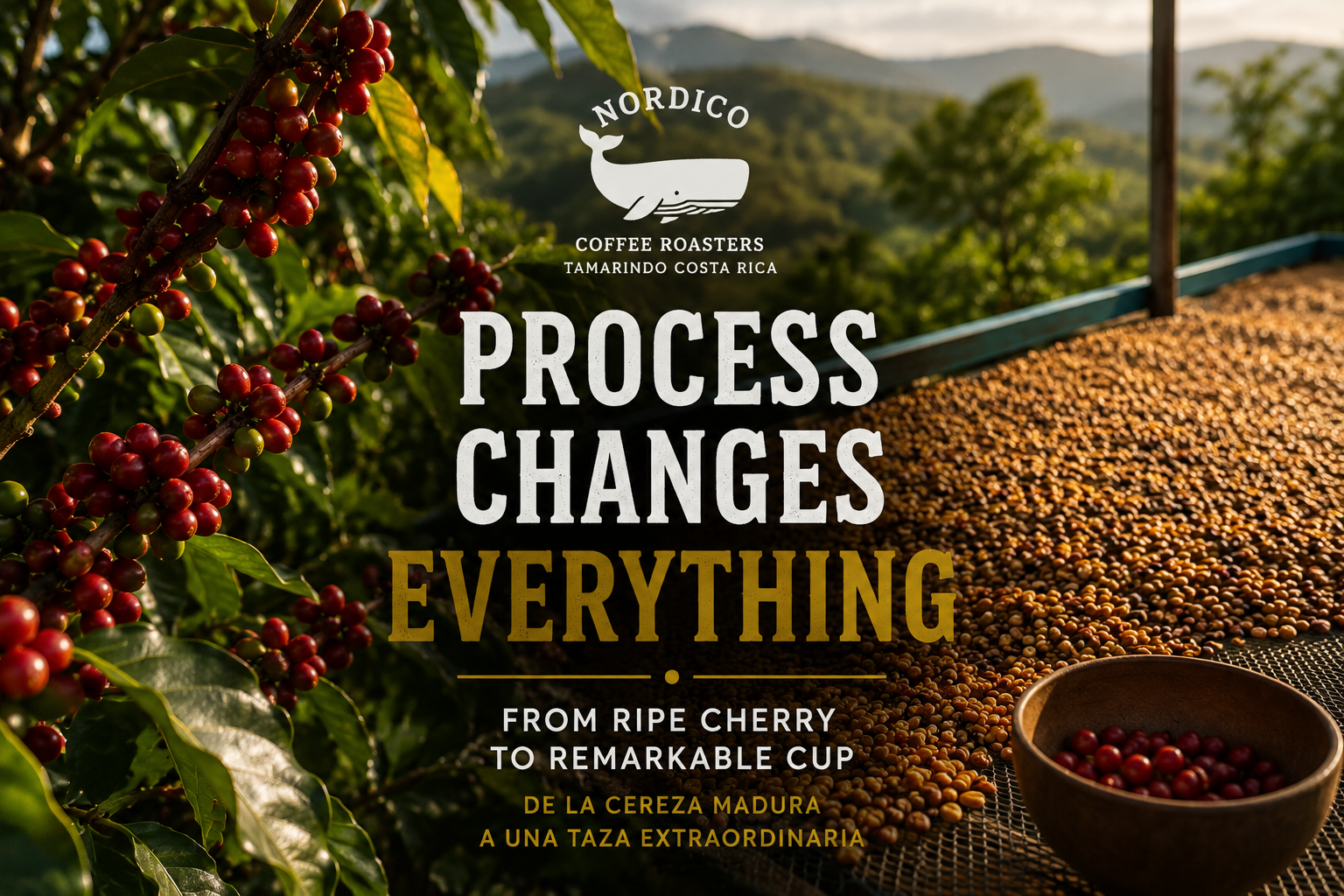


Roasting turns green coffee beans into the fragrant, soluble material we grind and brew. The roast does not create quality on its own: it develops the potential already present in the coffee, including its variety, origin, harvest and processing. Here is how roast levels and roasting decisions influence what you taste.
Want to go deeper? Read Nordico’s guide to the coffee roasting process, stages and roast profiles.
What happens during coffee roasting?
Green beans absorb heat, lose water, change color and develop aromas through complex chemical reactions. Roasters monitor bean temperature trends, time, airflow and sensory feedback. The first audible crack is a useful milestone, but a quality roast cannot be defined by one crack, temperature or minute alone.
Light, medium and dark: useful labels, not universal recipes
Light roasts
Light roasts can showcase a coffee’s acidity, floral notes, fruit character and distinct origin. They may be more demanding to extract evenly, particularly in espresso. A light roast should still taste developed and sweet rather than grassy or sharply underdeveloped.
Medium roasts
Medium is a broad, nonstandard label. A balanced medium roast may emphasize sweetness, body and clarity while preserving the coffee’s character. Two roasters can both say “medium” and mean quite different roast profiles.
Dark roasts
Darker roasting can move the balance toward roast-derived flavors, more bitterness and less perception of delicate origin notes. Oil on the surface is not a mandatory sign of quality. At Nordico, even our darkest coffees are developed before second crack; descriptions of conventional very dark or second-crack roasts are not descriptions of our own roasting practice.
What matters more than roast color?
- Green-coffee quality: the raw material, moisture condition, processing and storage set the starting point.
- Heat and timing: energy applied through the roast shapes development; too little or too much can mute desirable flavors.
- Airflow and equipment: airflow, batch size and roaster design affect heat transfer and consistency.
- Development and evaluation: cupping and brewing provide more useful feedback than a color label alone.
Small-batch and industrial roasting can both produce excellent or poor coffee. Skill, suitable equipment, clean green coffee and repeatable tasting matter more than marketing labels.
Does dark roast have less caffeine?
There is no dependable rule that one roast level always delivers much more or less caffeine in a cup. Roast-related changes are often smaller than the effects of coffee dose, bean type, grind, extraction and whether you measure coffee by weight or volume. If caffeine matters to you, use a consistent gram-based recipe rather than assuming darker means decaf-like.
How to choose a roast for your brew
Start with flavors you actually enjoy, not a fixed rule about what must be used for espresso or filter. A fruit-forward coffee can be enjoyable in either method if the grind and recipe are adjusted. If you prefer sweetness and body, compare the tasting notes of several coffees and then refine your brew.
Discover the coffees currently selected and roasted by Nordico in Costa Rica, or take a deeper look at how washed, honey, natural and anaerobic processing can shape flavor.
Coffee roasting FAQs
How long does roasting take?
There is no correct universal roast time. Duration varies with equipment, batch size, green coffee, intended profile and the heat applied throughout the roast.
Can I roast coffee at home?
Home roasting is possible with suitable equipment, ventilation and careful attention to heat and fire safety. Consistent results still require practice and evaluation.
Is a darker roast automatically stronger?
“Stronger” can mean roast flavor, bitterness, brew concentration or caffeine. Those are different things, so it helps to name the characteristic you want.
At Nordico, our aim is not to chase the darkest or lightest label. It is to roast each Costa Rican coffee with its origin, flavor and intended brewing experience in mind.